product-image
product-image
product-image
product-image
product-image
Product Image
    1
    2
    3
    4
    5
    6
new | The Book of Shells: A Life-Size Guide to Identifying and Classifying Six Hundred Seashells
Brand : University of Chicago Press
new | The Book of Shells: A Life-Size Guide to Identifying and Classifying Six Hundred Seashells
Brand : University of Chicago Press
Availability : 
Out Of Stock
Click to connect with our customer support

Product Specifications
Conditionnew
Asin226315770
CategoryBooks
SubcategoryReference
LeafcategoryBook
MPNcolour illustrations, maps, frontispiece
OriginUSA
BrandnameUniversity of Chicago Press
Height10.5
Length1.75
Width7
Weight6
Product Description
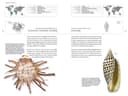
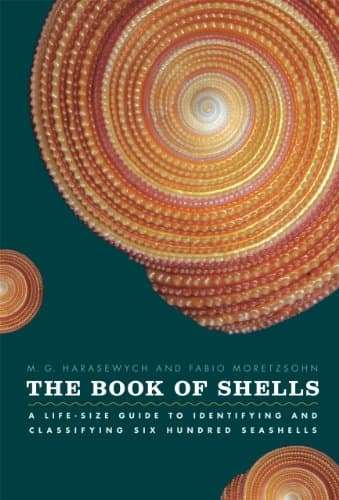
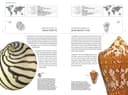
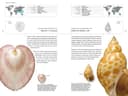
Product DescriptionWho among us hasn?t marveled at the diversity and beauty of shells? Or picked one up, held it to our ear, and then gazed in wonder at its shape and hue? Many a lifelong shell collector has cut teeth (and toes) on the beaches of the Jersey Shore, the Outer Banks, or the coasts of Sanibel Island. Some have even dived to the depths of the ocean. But most of us are not familiar with the biological origin of shells, their role in explaining evolutionary history, and the incredible variety of forms in which they come. Shells are the external skeletons of mollusks, an ancient and diverse phylum of invertebrates that are in the earliest fossil record of multicellular life over 500 million years ago. There are over 100,000 kinds of recorded mollusks, and some estimate that there are over amillion more that have yet to be discovered. Some breathe air, others live in fresh water, but most live in the ocean. They range in size from a grain of sand to a beach ball and in weight from a few grams to several hundred pounds. And in this lavishly illustrated volume, they finally get their full due.The Book of Shells offers a visually stunning and scientifically engaging guide to six hundred of the most intriguing mollusk shells, each chosen to convey the range of shapes and sizes that occur across a range of species. Each shell is reproduced here at its actual size, in full color, and is accompanied by an explanation of the shell?s range, distribution, abundance, habitat, and operculum-the piece that protects the mollusk when it?s in the shell. Brief scientific and historical accounts of each shell and related species include fun-filled facts and anecdotes that broaden its portrait. The Matchless Cone, for instance, or Conus cedonulli, was one of the rarest shells collected during the eighteenth century. So much so, in fact, that a specimen in 1796 was sold for more than six times as much as a painting by Vermeer at the same auction. But since the advent of scuba diving, this shell has become far more accessible to collectors-though not without certain risks. Some species of Conus produce venom that has caused more than thirty known human deaths.The Zebra Nerite, the Heart Cockle, the Indian Babylon, the Junonia, the Atlantic Thorny Oyster-shells from habitats spanning the poles and the tropics, from the highest mountains to the ocean?s deepest recesses, are all on display in this definitive work.From BooklistBeachcombing for beautiful or unusual seashells remains a popular pastime. Identification of the many thousands of species of shell-producing mollusks can pose a challenge, however. Authored by a pair of subject specialists with an emphasis on larger and more familiar species, The Book of Shells provides an excellent introduction to the major classes of sea-living mollusks worldwide. Students and the lay enthusiast will find the 600 entries accessible and engaging. Representing a small portion of the known species of mollusks, the shells depicted here are generally the most familiar, although a few rare and newly discovered forms are included as well. Uniformly one page in length, each entry follows a standard format. A table lists the family, shell-size range, distribution, abundance, depth, habitat, feeding habit, and the presence or absence of an operculum. A color range map, genus and species and common name, a paragraph-long description of the species, a listing of related species, a color life-size illustration, and, for small shells, a larger, more detailed image complete the information. A taxonomic organization defines the five sections: chitons, bivalves, scaphopods, gastropods, and cephalopods. Species are arranged by physical size, from smallest to largest, within each family. Supplementary materials include essays on shell characteristics and shell collecting and a basic guide to identifying seashells. The 2,400 illustrations comprise nineteenth-century engravings as well as photographs. To captur
Product Description
Product DescriptionWho among us hasn?t marveled at the diversity and beauty of shells? Or picked one up, held it to our ear, and then gazed in wonder at its shape and hue? Many a lifelong shell collector has cut teeth (and toes) on the beaches of the Jersey Shore, the Outer Banks, or the coasts of Sanibel Island. Some have even dived to the depths of the ocean. But most of us are not familiar with the biological origin of shells, their role in explaining evolutionary history, and the incredible variety of forms in which they come. Shells are the external skeletons of mollusks, an ancient and diverse phylum of invertebrates that are in the earliest fossil record of multicellular life over 500 million years ago. There are over 100,000 kinds of recorded mollusks, and some estimate that there are over amillion more that have yet to be discovered. Some breathe air, others live in fresh water, but most live in the ocean. They range in size from a grain of sand to a beach ball and in weight from a few grams to several hundred pounds. And in this lavishly illustrated volume, they finally get their full due.The Book of Shells offers a visually stunning and scientifically engaging guide to six hundred of the most intriguing mollusk shells, each chosen to convey the range of shapes and sizes that occur across a range of species. Each shell is reproduced here at its actual size, in full color, and is accompanied by an explanation of the shell?s range, distribution, abundance, habitat, and operculum-the piece that protects the mollusk when it?s in the shell. Brief scientific and historical accounts of each shell and related species include fun-filled facts and anecdotes that broaden its portrait. The Matchless Cone, for instance, or Conus cedonulli, was one of the rarest shells collected during the eighteenth century. So much so, in fact, that a specimen in 1796 was sold for more than six times as much as a painting by Vermeer at the same auction. But since the advent of scuba diving, this shell has become far more accessible to collectors-though not without certain risks. Some species of Conus produce venom that has caused more than thirty known human deaths.The Zebra Nerite, the Heart Cockle, the Indian Babylon, the Junonia, the Atlantic Thorny Oyster-shells from habitats spanning the poles and the tropics, from the highest mountains to the ocean?s deepest recesses, are all on display in this definitive work.From BooklistBeachcombing for beautiful or unusual seashells remains a popular pastime. Identification of the many thousands of species of shell-producing mollusks can pose a challenge, however. Authored by a pair of subject specialists with an emphasis on larger and more familiar species, The Book of Shells provides an excellent introduction to the major classes of sea-living mollusks worldwide. Students and the lay enthusiast will find the 600 entries accessible and engaging. Representing a small portion of the known species of mollusks, the shells depicted here are generally the most familiar, although a few rare and newly discovered forms are included as well. Uniformly one page in length, each entry follows a standard format. A table lists the family, shell-size range, distribution, abundance, depth, habitat, feeding habit, and the presence or absence of an operculum. A color range map, genus and species and common name, a paragraph-long description of the species, a listing of related species, a color life-size illustration, and, for small shells, a larger, more detailed image complete the information. A taxonomic organization defines the five sections: chitons, bivalves, scaphopods, gastropods, and cephalopods. Species are arranged by physical size, from smallest to largest, within each family. Supplementary materials include essays on shell characteristics and shell collecting and a basic guide to identifying seashells. The 2,400 illustrations comprise nineteenth-century engravings as well as photographs. To captur